Reading notes
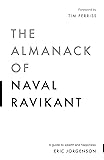
The Almanack of Naval Ravikant
Eric Jorgenson · Wisdom of Naval Ravikant
Highlights
Other highlights 82
Getting rich is about knowing what to do, who to do it with, and when to do it.
You will get rich by giving society what it wants but does not yet know how to get. At scale.
Pick an industry where you can play long-term games with long-term people.
Code and media are permissionless leverage. They’re the leverage behind the newly rich. You can create software and media that works for you while you sleep.
If you can’t code, write books and blogs, record videos and podcasts.
You should be too busy to “do coffee” while still keeping an uncluttered calendar.
Work as hard as you can. Even though who you work with and what you work on are more important than how hard you work.
Become the best in the world at what you do. Keep redefining what you do until this is true.
If you’re not 100 percent into it, somebody else who is 100 percent into it will outperform you. And they won’t just outperform you by a little bit—they’ll outperform you by a lot because now we’re operating the domain of ideas, compound interest really applies and leverage really applies. [78]
Basic arithmetic and numeracy are way more important in life than doing calculus. Similarly, being able to convey yourself simply using ordinary English words is far more important than being able to write poetry, having an extensive vocabulary, or speaking seven different foreign languages.
Foundations are key. It’s much better to be at 9/10 or 10/10 on foundations than to try and get super deep into things.
Without ownership, your inputs are very closely tied to your outputs. In almost any salaried job, even one paying a lot per hour like a lawyer or a doctor, you’re still putting in the hours, and every hour you get paid. Without ownership, when you’re sleeping, you’re not earning. When you’re retired, you’re not earning. When you’re on vacation, you’re not earning. And you can’t earn nonlinearly.
There are three broad classes of leverage:
One form of leverage is labor—other humans working for you. It is the oldest form of leverage, and actually not a great one in the modern world. [1]
The higher the creativity component of a profession, the more likely it is to have disconnected inputs and outputs.
The problem is, to win at a status game, you have to put somebody else down. That’s why you should avoid status games in your life—they make you into an angry, combative person. You’re always fighting to put other people down, to put yourself and the people you like up.
I’m always “working.” It looks like work to others, but it feels like play to me. And that’s how I know no one can compete with me on it. Because I’m just playing, for sixteen hours a day. If others want to compete with me, they’re going to work, and they’re going to lose because they’re not going to do it for sixteen hours a day, seven days a week. [77]
Another thing that helps: I value freedom above everything else. All kinds of freedom: freedom to do what I want, freedom from things I don’t want to do, freedom from my own emotions or things that may disturb my peace. For me, freedom is my number one value.
Then, there’s luck through persistence, hard work, hustle, and motion. This is when you’re running around creating opportunities. You’re generating a lot of energy, you’re doing a lot to stir things up. It’s almost like mixing a petri dish or mixing a bunch of reagents and seeing what combines. You’re just generating enough force, hustle, and energy for luck to find you.
The last kind of luck is the weirdest, hardest kind, where you build a unique character, a unique brand, a unique mindset, which causes luck to find you.
Your character and your reputation are things you can build, which will let you take advantage of opportunities other people may characterize as lucky, but you know it wasn’t luck. [78] My co-founder Nivi said, “In a long-term game, it seems that everybody is making each other rich. And in a short-term game, it seems like everybody is making themselves rich.”
Your real résumé is just a catalog of all your suffering. If I ask you to describe your real life to yourself, and you look back from your deathbed at the interesting things you’ve done, it’s all going to be around the sacrifices you made, the hard things you did.
The number one thing clouding us from being able to see reality is we have preconceived notions of the way it should be.
Optimistic contrarians are the rarest breed.
I would combine radical honesty with an old rule Warren Buffett has, which is praise specifically, criticize generally.
If you have a criticism of someone, then don’t criticize the person—criticize the general approach or criticize the class of activities. If you have to praise somebody, then always try and find the person who is the best example of what you’re praising and praise the person, specifically.
The more you know, the less you diversify.
If you do not understand the principal-agent problem, you will not know how to navigate your way through the world.
If it doesn’t make falsifiable predictions, it’s not science. For you to believe something is true, it should have predictive power, and it must be falsifiable. [11]
If you cannot decide, the answer is no. And the reason is, modern society is full of options. There are tons and tons of options.
Reading science, math, and philosophy one hour per day will likely put you at the upper echelon of human success within seven years.
There’s no mission here to accomplish. Just read because you enjoy it.
Reading a book isn’t a race—the better the book, the more slowly it should be absorbed.
I don’t believe in delayed gratification when there are an infinite number of books out there to read. There are so many great books.
Most books have one point to make. (Obviously, this is nonfiction. I’m not talking about fiction.) They have one point to make, they make it, and then they give you example after example after example after example, and they apply it to explain everything in the world. Once I feel like I’ve gotten the gist, I feel very comfortable putting the book down.
Read the greats in math, science, and philosophy. Ignore your contemporaries and news. Avoid tribal identification. Put truth above social approval. [11]
I have people in my life I consider to be very well-read who aren’t very smart. The reason is because even though they’re very well-read, they read the wrong things in the wrong order. They started out reading a set of false or just weakly true things, and those formed the axioms of the foundation for their worldview. Then, when new things come, they judge the new idea based on a foundation they already built. Your foundation is critical.
Twitter has made me a worse reader but a much better writer.
When solving problems: the older the problem, the older the solution.
Any book that survived for two thousand years has been filtered through many people. The general principles are more likely to be correct. I wanted to get back into reading these sorts of books. [6]
A calm mind, a fit body, and a house full of love. These things cannot be bought. They must be earned.
Today, I believe happiness is really a default state. Happiness is there when you remove the sense of something missing in your life.
You have to view the negative before you can aspire to and appreciate the positive.
Memory and identity are burdens from the past preventing us from living freely in the present. [3]
Looking outside yourself for anything is the fundamental delusion. Not to say you shouldn’t do things on the outside. You absolutely should. You’re a living creature. There are things you do. You locally reverse entropy. That’s why you’re here.
Happiness is being satisfied with what you have. Success comes from dissatisfaction. Choose.
To me, the real winners are the ones who step out of the game entirely, who don’t even play the game, who rise above it. Those are the people who have such internal mental and self-control and self-awareness, they need nothing from anybody else.
My most surprising discovery in the last five years is that peace and happiness are skills.
When working, surround yourself with people more successful than you. When playing, surround yourself with people happier than you.
But you shouldn’t choose them haphazardly based on who you live next to or who you happen to work with. The people who are the most happy and optimistic choose the right five chimps. [8]
If you can’t see yourself working with someone for life, don’t work with them for a day.
Meditation isn’t hard. All you have to do is sit there and do nothing. Just sit down. Close your eyes and say, “I’m just going to give myself a break for an hour. This is my hour off from life. This is the hour I’m not going to do anything.
At the very least, I do not want my sense of self to continue to develop and strengthen as I get older. I want it to be weaker and more muted so I can be more in present everyday reality, accept nature and the world for what it is, and appreciate it very much as a child would. [4]
The advantage of meditation is recognizing just how out of control your mind is.
Meditation is turning off society and listening to yourself. It only “works” when done for its own sake. Hiking is walking meditation. Journaling is writing meditation. Praying is gratitude meditation. Showering is accidental meditation. Sitting quietly is direct meditation.
Anything you have to do, just get it done. Why wait? You’re not getting any younger. Your life is slipping away.
The current environment programs the brain, but the clever brain can choose its upcoming environment.
I’m not going to be the most successful person on the planet, nor do I want to be. I just want to be the most successful version of myself while working the least hard possible.
He may not have nailed life in every regard, but he sets up systems so he’s failed in very few places. [4]
Grind and sweat, toil and bleed, face the abyss. It’s all part of becoming an overnight success.
Number one: read. Read everything you can.
Related to the skill of reading are the skills of mathematics and persuasion.
You should know statistics and probability forwards and backwards and inside out. [8]
My old definition was “freedom to.” Freedom to do anything I want. Freedom to do whatever I feel like, whenever I feel like. Now, the freedom I’m looking for is internal freedom. It’s “freedom from.” Freedom from reaction. Freedom from feeling angry. Freedom from being sad. Freedom from being forced to do things. I’m looking for “freedom from,” internally and externally, whereas before I was looking for “freedom to.” [4]
People who live far below their means enjoy a freedom that people busy upgrading their lifestyles can’t fathom. [11]
To me, the mind should be a servant and a tool, not a master. My monkey mind should not control and drive me 24/7.
The modern struggle: Lone individuals summoning inhuman willpower, fasting, meditating, and exercising… Up against armies of scientists and statisticians weaponizing abundant food, screens, and medicine into junk food, clickbait news, infinite porn, endless games, and addictive drugs.
A really unbounded, big question: what is the meaning and purpose of life?
Fundamentally, you have to find it for yourself, so the important part is not the answer, it’s the question. You just have to sit there and dig with the question. It might take you years or decades. When you find an answer you’re happy with, it will be fundamental to your life.
What are your core values?
Honesty is a core, core, core value. By honesty, I mean I want to be able to just be me. I never want to be in an environment or around people where I have to watch what I say.
Another one is I only believe in peer relationships. I don’t believe in hierarchical relationships. I don’t want to be above anybody, and I don’t want to be below anybody.
Another: I don’t believe in anger anymore. Anger was good when I was young and full of testosterone, but now I like the Buddhist saying, “Anger is a hot coal you hold in your hand while waiting to throw it at somebody.”
My wife is an incredibly lovely, family-oriented person, and so am I. That was one of the foundational values that brought us together.
All of a sudden, the most important thing in the Universe moves from being in your body into the child’s body. That changes you. Your values inherently become a lot less selfish. [4]
Rational Buddhism, to me, means understanding the internal work Buddhism espouses to make yourself happier, better off, more present and in control of your emotions—being a better human being.
Try everything, test it for yourself, be skeptical, keep what’s useful, and discard what’s not.
The Compleat Strategyst: Being a Primer on the Theory of Games of Strategy
The Evolution of Cooperation
Meditations by Marcus Aurelius
The Undercover Economist
Man’s Search for Meaning
Time, focus, and practice 18
Seek wealth, not money or status. Wealth is having assets that earn while you sleep. Money is how we transfer time and wealth. Status is your place in the social hierarchy.
Your reputation will literally end up being thousands or tens of thousands of times more valuable than somebody else who was very talented but is not keeping the compound interest in reputation going.
It’s only after you’re bored you have the great ideas. It’s never going to be when you’re stressed, or busy, running around or rushed. Make the time. [7]
Almost all biases are time-saving heuristics. For important decisions, discard memory and identity, and focus on the problem.
Charisma is the ability to project confidence and love at the same time. It’s almost always possible to be honest and positive. [71]
I don’t know about you, but I have very poor attention. I skim. I speed read. I jump around. I could not tell you specific passages or quotes from books. At some deep level, you absorb them, and they become threads in the tapestry of your psyche. They kind of weave in there.
“As long as I have a book in my hand, I don’t feel like I’m wasting time.”
I came up with this hack where I started treating books as throwaway blog posts or bite-sized tweets or posts. I felt no obligation to finish any book. Now, when someone mentions a book to me, I buy it. At any given time, I’m reading somewhere between ten and twenty books. I’m flipping through them.
I have lowered my identity. I have lowered the chattering of my mind. I don’t care about things that don’t really matter. I don’t get involved in politics. I don’t hang around unhappy people. I really value my time on this earth. I read philosophy. I meditate. I hang around with happy people. And it works.
The mind is just as malleable as the body. We spend so much time and effort trying to change the external world, other people, and our own bodies—all while accepting ourselves the way we were programmed in our youths.
Essentially, you have to go through your life replacing your thoughtless bad habits with good ones, making a commitment to be a happier person.
Pick one thing. Cultivate a desire. Visualize it. Plan a sustainable path. Identify needs, triggers, and substitutes. Tell your friends. Track meticulously. Self-discipline is a bridge to a new self-image. Bake in the new self-image. It’s who you are—now. [11] First, you know it. Then, you understand it. Then, you can explain it. Then, you can feel it. Finally, you are it.
The ability to singularly focus is related to the ability to lose yourself and be present, happy, and (ironically) more effective. [4]
We have a little bit of extra brainpower in our neocortex for solving new problems. You become your habits. This came to light for me when my trainer gave me a routine to do every single day. I had never worked out every single day before. It’s a light workout. It’s not tough on your body, but I did this workout every single day. I realized the incredible, astonishing transformation it had on me both physically and mentally.
This taught me the power of habits. I started realizing it’s all about habits. At any given time, I’m either trying to pick up a good habit or discard a previous bad habit. It takes time.
You should always be internally ready for a complete change. Whenever we say we’re going to try to do something or try to form a habit, we’re wimping out.
Anyone who has known me for a long time knows my defining characteristic is a combination of being very impatient and willful. I don’t like to wait. I hate wasting time. I’m very famous for being rude at parties, events, dinners, where the moment I figure out it’s a waste of my time, I leave immediately.
Value your time. It is all you have. It’s more important than your money. It’s more important than your friends. It is more important than anything. Your time is all you have. Do not waste your time. This doesn’t mean you can’t relax. As long as you’re doing what you want, it’s not a waste of your time. But if you’re not spending your time doing what you want, and you’re not earning, and you’re not learning—what the heck are you doing?
Capital and investment decisions 14
You’re not going to get rich renting out your time. You must own equity—a piece of a business—to gain your financial freedom.
Play iterated games. All the returns in life, whether in wealth, relationships, or knowledge, come from compound interest.
Capital and labor are permissioned leverage. Everyone is chasing capital, but someone has to give it to you. Everyone is trying to lead, but someone has to follow you.
If you’re looking toward the long-term goal of getting wealthy, you should ask yourself, “Is this authentic to me? Is it myself that I am projecting?” And then, “Am I productizing it? Am I scaling it? Am I scaling with labor or with capital or with code or with media?” So it’s a very handy, simple mnemonic. [78]
Because he goes so far out of his way to treat me so well, I send him every deal I have—I try to include him in everything. Then, I go out of my way to try and pay for him. Compounding in those relationships is very valuable. [10]
When you find the right thing to do, when you find the right people to work with, invest deeply. Sticking with it for decades is really how you make the big returns in your relationships and in your money. So, compound interest is very important. [10]
Luckily, in modern society, there’s no more debtors’ prison and people aren’t imprisoned or executed for losing other people’s money, but we’re still socially hardwired to not fail in public under our own names. The people who have the ability to fail in public under their own names actually gain a lot of power.
Money is good as a form of leverage. It means every time you make a decision, you multiply it with money. [1] Capital is a trickier form of leverage to use. It’s more modern. It’s the one that people have used to get fabulously wealthy in the last century. It’s probably been the dominant form of leverage in the last century.
It scales very, very well. If you get good at managing capital, you can manage more and more capital much more easily than you can manage more and more people. [78]
Even then, it has been a slow and steady struggle. I haven’t made money in my life in one giant payout. It has always been a whole bunch of small things piling up. It’s more about consistently creating wealth by creating businesses, creating opportunities, and creating investments. It hasn’t been a giant one-off thing. My personal wealth has not been generated by one big year. It just stacks up a little bit, a few chips at a time: more options, more businesses, more investments, more things I can do.
Literally, being anti-wealth will prevent you from becoming wealthy, because you will not have the right mindset for it, you won’t have the right spirit, and you won’t be dealing with people on the right level. Be optimistic, be positive. It’s important. Optimists actually do better in the long run. [10]
I don’t think you can be successful in business or even navigate most of our modern capitalist society without an extremely good understanding of supply-and-demand, labor-versus-capital, game theory, and those kinds of things. [4]
When you do them, you want to do them as quickly as you can while doing them well with your full attention. But then, you just have to be patient with the results because you’re dealing with complex systems and many people.
Another example of a foundational value: I don’t believe in any short-term thinking or dealing.
People, leadership, and culture 4
Pick business partners with high intelligence, energy, and, above all, integrity.
Don’t partner with cynics and pessimists. Their beliefs are self-fulfilling.
This is also true when you’re working with individual people. If you’ve worked with somebody for five or ten years and you still enjoy working with them, obviously you trust them, and the little foibles are gone.
Facebook redesigns. Twitter redesigns. Personalities, careers, and teams also need redesigns. There are no permanent solutions in a dynamic system.
Learning and judgment 33
Learn to sell. Learn to build. If you can do both, you will be unstoppable.
Arm yourself with specific knowledge, accountability, and leverage.
Specific knowledge is knowledge you cannot be trained for. If society can train you, it can train someone else and replace you.
Specific knowledge is found by pursuing your genuine curiosity and passion rather than whatever is hot right now.
When specific knowledge is taught, it’s through apprenticeships, not schools.
Specific knowledge is often highly technical or creative. It cannot be outsourced or automated.
The most important skill for getting rich is becoming a perpetual learner. You have to know how to learn anything you want to learn. The old model of making money is going to school for four years, getting your degree, and working as a professional for thirty years. But things change fast now. Now, you have to come up to speed on a new profession within nine months, and it’s obsolete four years later. But within those three productive years, you can get very wealthy.
You really care about having studied the foundations, so you’re not scared of any book. If you go to the library and there’s a book you cannot understand, you have to dig down and say, “What is the foundation required for me to learn this?” Foundations are super important. [74]
A leveraged worker can out-produce a non-leveraged worker by a factor of one thousand or ten thousand. With a leveraged worker, judgment is far more important than how much time they put in or how hard they work.
People will throw infinite leverage behind him because of his judgment. Nobody asks him how hard he works. Nobody asks him when he wakes up or when he goes to sleep. They’re like, “Warren, just do your thing.” Judgment—especially demonstrated judgment, with high accountability and a clear track record—is critical. [78]
Ironically, I actually think I’ve beaten it. I’m not the hardest working person—I’m actually a lazy person. I work through bursts of energy where I’m really motivated with something. If I actually look at how much I’ve earned per actual hour that I’ve put in, it’s probably quite a bit higher than that. [78]
Everybody wants to get rich immediately, but the world is an efficient place; immediate doesn’t work. You do have to put in the time. You do have to put in the hours, and so I think you have to put yourself in the position with the specific knowledge, with accountability, with leverage, with the authentic skill set you have, to be the best in the world at what you do.
My definition of wisdom is knowing the long-term consequences of your actions. Wisdom applied to external problems is judgment. They’re highly linked; knowing the long-term consequences of your actions and then making the right decision to capitalize on that. [78]
The direction you’re heading in matters more than how fast you move, especially with leverage. Picking the direction you’re heading in for every decision is far, far more important than how much force you apply. Just pick the right direction to start walking in, and start walking. [1]
It’s actually really important to have empty space. If you don’t have a day or two every week in your calendar where you’re not always in meetings, and you’re not always busy, then you’re not going to be able to think. You’re not going to be able to have good ideas for your business. You’re not going to be able to make good judgments. I also encourage taking at least one day a week (preferably two, because if you budget two, you’ll end up with one) where you just have time to think.
I try not to have too much I’ve pre-decided. I think creating identities and labels locks you in and keeps you from seeing the truth.
If all your beliefs line up into neat little bundles, you should be highly suspicious.
We each have a contrarian belief society rejects. But the more our own identity and local tribe reject it, the more real it likely is.
Decision-making is everything. [4]
I don’t believe I have the ability to say what is going to work. Rather, I try to eliminate what’s not going to work. I think being successful is just about not making mistakes. It’s not about having correct judgment. It’s about avoiding incorrect judgments. [4]
Simple heuristic: If you’re evenly split on a difficult decision, take the path more painful in the short term.
The means of learning are abundant—it’s the desire to learn that is scarce. [3]
I don’t actually read much compared to what people think. I probably read one to two hours a day. That puts me in the top .00001 percent. I think that alone accounts for any material success I’ve had in my life and any intelligence I might have. Real people don’t read an hour a day. Real people, I think, read a minute a day or less. Making it an actual habit is the most important thing.
Explain what you learned to someone else. Teaching forces learning.
The more present I am, the happier and more content I will be. If I latch onto a feeling, if I say, “Oh, I’m happy now,” and I want to stay happy, then I’m going to drop out of that happiness. Now, suddenly, the mind is moving. It’s trying to attach to something. It’s trying to create a permanent situation out of a temporary situation. Happiness to me is mainly not suffering, not desiring, not thinking too much about the future or the past, really embracing the present moment and the reality of what is, and the way it is. [4]
If you look at little children, on balance, they’re generally pretty happy because they are really immersed in the environment and the moment, without any thought of how it should be given their personal preferences and desires. I think the neutral state is actually a perfection state. One can be very happy as long as one isn’t too caught up in their own head. [4]
I think the most common mistake for humanity is believing you’re going to be made happy because of some external circumstance.
“If thoughts come, thoughts come. I’m not going to fight them. I’m not going to embrace them. I’m not going to think harder about them. I’m not going to reject them. I’m just going to sit here for an hour with my eyes closed, and I’m going to do nothing.” How hard is that? Why can you not do anything for an hour? What’s so hard about giving yourself an hour-long break? [74]
I would have realized the anger and emotions are a huge, completely unnecessary consequence. Now, I’m trying to learn from that and do the same things I think are the right things to do but without anger and with a very long-term point of view. If you take a very long-term point of view and take the emotion out of it, I wouldn’t consider those things mistakes anymore. [4]
“Set up systems, not goals.” Use your judgment to figure out what kinds of environments you can thrive in, and then create an environment around you so you’re statistically likely to succeed.
Having the skill of persuasion is important because if you can influence your fellow human beings, you can get a lot done. I think persuasion is an actual skill. So you can learn it, and it’s not that hard to do so.
Don’t spend your time making other people happy. Other people being happy is their problem. It’s not your problem. If you are happy, it makes other people happy. If you’re happy, other people will ask you how you became happy and they might learn from it, but you are not responsible for making other people happy. [10]
How do you define wisdom? Understanding the long-term consequences of your actions. [11]
Incentives and human behavior 2
Study microeconomics, game theory, psychology, persuasion, ethics, mathematics, and computers.
So to get these things, you have to build credibility, and you have to do it under your own name as much as possible, which is risky. So, accountability is a double-edged thing. It allows you to take credit when things go well and to bear the brunt of the failure when things go badly. [78] Clear accountability is important. Without accountability, you don’t have incentives. Without accountability, you can’t build credibility. But you take risks. You risk failure. You risk humiliation. You risk failure under your own name.
Progress and innovation 2
I’m in venture investing, which requires me to come up to speed very, very quickly on new technologies (and I’m rewarded for getting bored because new technologies come along). It matches up pretty well with my specific knowledge and skill sets. [10]
You never have a counterexample when studying the economy. You can never take the US economy and run two different experiments at the same time. [4]
Customers and building businesses 7
“Escape competition through authenticity.” Basically, when you’re competing with people, it’s because you’re copying them. It’s because you’re trying to do the same thing. But every human is different. Don’t copy. [78]
The final form of leverage is brand new—the most democratic form. It is: “products with no marginal cost of replication.” This includes books, media, movies, and code. Code is probably the most powerful form of permissionless leverage.
The most interesting and the most important form of leverage is the idea of products that have no marginal cost of replication. This is the new form of leverage.
A third is you’re doing something you love. You enjoy it so much, it’s not about the money. So there are multiple ways to retirement. The way to get out of the competition trap is to be authentic, to find the thing you know how to do better than anybody. You know how to do it better because you love it, and no one can compete with you. If you love to do it, be authentic, and then figure out how to map that to what society actually wants. Apply some leverage and put your name on it.
Trying to build business relationships well in advance of doing business is a complete waste of time. I have a much more comfortable philosophy: “Be a maker who makes something interesting people want. Show your craft, practice your craft, and the right people will eventually find you.” [14]
When you are the principal, then you are the owner—you care, and you will do a great job. When you are the agent and you are doing it on somebody else’s behalf, you can do a bad job. You just don’t care. You optimize for yourself rather than for the principal’s assets. The smaller the company, the more everyone feels like a principal. The less you feel like an agent, the better the job you’re going to do. The more closely you can tie someone’s compensation to the exact value they’re creating, the more you turn them into a principal, and the less you turn them into an agent. [12]
Your goal in life is to find the people, business, project, or art that needs you the most. There is something out there just for you.
Referenced by
Connect the public archive to find incoming links.