Reading notes
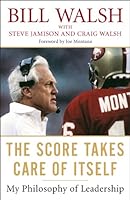
The Score Takes Care of Itself
Bill Walsh, Steve Jamison, Craig Walsh
Highlights
Time, focus, and practice 2
Instead, I arrived with an urgent timetable for installing an agenda of specific behavioral norms—actions and attitudes—that applied to every single person on our payroll.
Exhibit a ferocious and intelligently applied work ethic directed at continual improvement; demonstrate respect for each person in the organization and the work he or she does; be deeply committed to learning and teaching, which means increasing my own expertise; be fair; demonstrate character; honor the direct connection between details and improvement, and relentlessly seek the latter; show self-control, especially where it counts most—under pressure; demonstrate and prize loyalty; use positive language and have a positive attitude; take pride in my effort as an entity separate from the result of that effort; be willing to go the extra distance for the organization; deal appropriately with victory and defeat, adulation and humiliation (don’t get crazy with victory nor dysfunctional with loss); promote internal communication that is both open and substantive (especially under stress); seek poise in myself and those I lead; put the team’s welfare and priorities ahead of my own; maintain an ongoing level of concentration and focus that is abnormally high; and make sacrifice and commitment the organization’s trademark.
People, leadership, and culture 6
Regardless of your specific job, it is vital to our team that you do that job at the highest possible level in all its various aspects, both mental and physical (i.e., good talent with bad attitude equals bad talent).
By adhering to your philosophical tenets you are provided with a systematic, yet practical, method of deciding what to do in a particular situation. It is a conceptual blueprint for action; that is, a perception of what should be done, when it should be done, and why it should be done. Your philosophy is the single most important navigational point on your leadership compass.
Much of this relates to the respect and sensitivity we accorded one another and to an appreciation of the roles each member of our organization fulfilled. Each player had a connection to and was an extension of his teammates.
And this organizational perception that “success belongs to everyone” is taught by the leader.
Leaders sometimes wonder why they or their organization fail to achieve success, never seem to reach their potential. It’s often because they don’t understand or can’t instill the concept of what a team is all about at its best: connection and extension.
The leader’s job is to facilitate a battlefield-like sense of camaraderie among his or her personnel, an environment for people to find a way to bond together, to care about one another and the work they do, to feel the connection and extension so necessary for great results. Ultimately, it’s the strongest bond of all, even stronger than money.
Learning and judgment 2
philosophy is the aggregate of your attitudes toward fundamental matters and is derived from a process of consciously thinking about critical issues and developing rational reasons for holding one particular belief or position rather than another.
I directed our focus less to the prize of victory than to the process of improving—obsessing, perhaps, about the quality of our execution and the content of our thinking; that is, our actions and attitude.
Customers and building businesses 1
However, he was correct that I had no grandiose plan or timetable for winning a championship, but rather a comprehensive standard and plan for installing a level of proficiency—competency—at which our production level would become higher in all areas, both on and off the field, than that of our opponents. Beyond that, I had faith that the score would take care of itself.
Other highlights 2
others. I would discuss a topic from every angle, every approach, never repeating it the same way, such as when I spoke on the subject of communication and interdependence—trying to keep the idea fresh and not become rote.
Everybody was connected, each of us an extension of the others, each of us with ownership in our organization.
Referenced by
Connect the public archive to find incoming links.