Reading notes
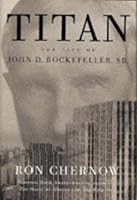
Titan
Ron Chernow
Highlights
Progress and innovation 3
America would only progress, he believed, with an educated citizenry. “In former times when learning was confined to the monks and priests, then it was that the world stood still, and it was not until the people were educated and began to think for themselves that it progressed.”
As a self-made man, Rockefeller would always deplore aristocracies and priesthoods as effete, reactionary foes of true progress, defenders of privilege against enterprising commoners.
As a self-made man in a new industry, Rockefeller wasn’t stultified by precedent or tradition, which made it easier for him to innovate. He continued to value autonomy from outside suppliers. At first, he had paid small coopers up to $2.50 for white oak barrels before he showed, in an early demonstration of economies of scale, that he could manufacture dry, tight casks more cheaply himself; soon his firm made thousands of blue-painted barrels daily for less than a dollar per barrel.
Other highlights 20
As at Owego Academy, classmates in Cleveland remembered Rockefeller voicing the fervent wish to be worth a hundred thousand dollars someday.
Seeing his education solely in utilitarian terms, he studied hard but showed no intellectual playfulness. “I was very sedate and earnest,” he said, “preparing to meet the responsibilities of life.”12 Once again, he displayed a fantastic mind for numbers. “Arithmetical problems most attracted him,”
Rockefeller never clarified why he dropped out of high school around May 1855, just two months shy of commencement exercises on July 16, but Bill’s second marriage on June 12 supplies the missing piece of the puzzle. About to enter into his second marriage, Bill must have been drastically scaling back on first-family expenditures, albeit without disclosing the reason for the sudden urgency.
“I went to the railroads, to the banks, to the wholesale merchants,” he later said. “I did not go to any small establishments. I did not guess what it would be, but I was after something big.”
In an imprecise world, they rooted things in a solid empirical reality. As he chided slipshod rivals, “Many of the brightest kept their books in such a way that they did not actually know when they were making money on a certain operation and when they were losing.”
In all probability, the boy’s orderly nature reflected a need to govern potentially unruly emotions, an exaggerated reaction to his disorderly father and helter-skelter childhood.
In fact, so closely did he supervise the contractors, so zealously did he outbargain them, that they lost money on the project.
Rockefeller claimed he would have stayed if Hewitt had matched his demand, but added, “even then I was preparing, getting ready for something big.”
However, he was persistent, which pleased or displeased people according to taste.
As we shall see, Rockefeller always viewed the industry through this rose-tinted spiritual lens, and it materially aided his success, for his conviction that God had given kerosene to suffering mankind gave him unswerving faith in the industry’s future, enabling him to persist where less confident men stumbled and faltered.
Able to ship by water or over land, Rockefeller gained the critical leverage he needed to secure preferential rates on transportation—which was why he agonized over plant locations throughout his career.
Having emerged as his own boss, he would never again feel his advancement blocked by shortsighted, mediocre men.
“I have always been contented, but I have never been satisfied.”
Thus walled off from temptation, Rockefeller was virtually untouched by the decadence of the Gilded Age.
“I know of nothing more despicable and pathetic than a man who devotes all the waking hours of the day to making money for money’s sake,” he recorded in his memoirs.7 He worked at a more leisurely pace than many other executives, napping daily after lunch and often dozing in a lounge chair after dinner. To explain his extraordinary longevity, he later said, doubtless overstating the matter, “I’m here because I shirked: did less work, lived more in the open air, enjoyed the open air, sunshine and exercise.”8
Why did the nation’s leading railroads offer Rockefeller and his confederates terms so generous as to render them all but omnipotent in oil refining? How did they benefit from this association? First, the railroads had engaged in such fierce, internecine price wars that freight rates had fallen sharply. No less than the oil producers, they needed somebody to arbitrate their disputes and save them from their own cutthroat tactics. The cornerstone of the SIC was a provision that Standard Oil would act as “evener” for the three railroads and ensure that each received a predetermined share of the oil traffic: Forty-five percent of the oil shipped by SIC members would travel over the Pennsylvania Railroad, 27.5 percent on the Erie, and 27.5 percent on the New York Central.
As always, the greater the tumult, the cooler Rockefeller became, and a strange calm settled over him when his colleagues were most disconcerted.
Like all revolutionaries, he saw himself as an instrument of higher purpose, endowed with a visionary faith. He knew that his actions would at first be resisted and misunderstood by the myopic crowd, but he believed that the force and truth of his ideas would triumph in the end.
Several rivals alleged that Rockefeller orchestrated a chorus of terrifying rumors about his secret pact with the railroads. Even without direct threats, he knew his opponents’ imaginations would embellish these stories and conjure up a conspiracy of unfathomable scope.
Rockefeller had clarified one thing in his own mind, however: Voluntary associations couldn’t move with the speed, unity, and efficiency he wanted. “We proved that the producers’ and refiners’ associations were ropes of sand,” he said.7 He was now through with ineffectual alliances and ready to bring the industry to heel under Standard Oil control.
Customers and building businesses 13
If motivated by greed more than he ever cared to admit, Rockefeller also derived a glandular pleasure from work and never found it cheerless drudgery. In fact, the business world entranced him as a fount of inexhaustible wonders. “It is by no means for money alone that these active-minded men labor—they are engaged in a fascinating occupation,” he wrote in his memoirs, published in 1908–1909. “The zest of the work is maintained by something better than the mere accumulation of money.”48
Instead of brashly trying to poach clients from rivals, he modestly outlined his firm’s services. “I would go into an office and present my card and say to the man that I supposed his business connections were satisfactory, and that I did not wish to intrude upon him, but that I had a proposition that I myself believed in and believed it would be to his advantage, that I did not expect him to decide off hand but asked him to think it over and I would see him again about it.”
Scarcely dreaming that oil would ever supersede their main commodity business, they considered it “a little side issue, we retaining our interest in our business as produce commission merchants.”
Since a residue of sulfuric acid remained after refining, Rockefeller drew up plans to convert it to fertilizer—the first of many worthwhile and extremely profitable attempts to create by-products from waste materials. Shaped by a childhood of uncertainty, he aspired to be self-sufficient in business no less than in life and reacted to a perpetual shortage of barrels by deciding to build his own. Disgusted by a suspicious error in a plumber’s bill, he told Sam Andrews, “Hire a plumber by the month. Let us buy our own pipes, joints, and all other plumbing material.”9 The refinery also did its own hauling and loading. Such was Rockefeller’s ingenuity, his ceaseless search for even minor improvements, that within a year refining had overtaken produce as the most profitable side of the business.
Rockefeller succeeded because he believed in the long-term prospects of the business and never treated it as a mirage that would soon fade.
Already contemplating the future, Rockefeller wanted to be surrounded by trustworthy people who could inspire confidence in customers and bankers alike. He drew a characteristic conclusion: The weak, immoral man was also destined to be a poor businessman. “We were beginning to prosper and I felt very uneasy at my name being linked up with these speculators.”
Despite her constant reluctance, Rockefeller pursued her with quiet persistence; in love as in business, he had a longer time frame, a more settled will, than other people.
Aside from his reputation for exemplary character, especially among Baptist business executives, Rockefeller had several other traits that inspired passionate allegiance from bankers. He was a stickler for the truth in presenting facts, never fudged or equivocated in discussing problems, and promptly repaid loans. At numerous points in his early career, he was rescued by bankers from crises that might have capsized his business.
Unlike his philandering father, John D. Rockefeller remained firmly, almost prudishly, anchored in domestic life. Much like Jay Gould—who didn’t drink, smoke, or gallivant with women—Rockefeller’s harsh business tactics were counterbalanced by exemplary behavior at home where he was a sweet, respectful Victorian husband. To borrow a line from Flaubert, to be fiercely revolutionary in business, he needed to be utterly conventional at home.
As someone who tended toward optimism, “seeing opportunity in every disaster,” he studied the situation exhaustively instead of bemoaning his bad luck.4 He saw that his individual success as a refiner was now menaced by industrywide failure and that it therefore demanded a systemic solution. This was a momentous insight, pregnant with consequences. Instead of just tending to his own business, he began to conceive of the industry as a gigantic, interrelated mechanism and thought in terms of strategic alliances and long-term planning.
For his admirers, 1872 was the annus mirabilis of John D. Rockefeller’s life, while for his critics it constituted the darkest chapter. The year revealed both his finest and most problematic qualities as a businessman: his visionary leadership, his courageous persistence, his capacity to think in strategic terms, but also his lust for domination, his messianic self-righteousness, and his contempt for those shortsighted mortals who made the mistake of standing in his way. What rivals saw as a naked power grab, Rockefeller regarded as a heroic act of salvation, nothing less than the rescue of the oil business.
Only in the twilight of life did Rockefeller realize how poorly his taciturnity had served him in business battles. This was especially true during the SIC furor, which evolved into a political and public-relations battle. By remaining silent in the face of criticism, he thought he would seem confident and secure in his integrity—in fact, he seemed guilty and arrogantly evasive.
Hence, a perverse effect of the invisible hand: Each refiner, pursuing his own self-interest, generated collective misery. As Rockefeller phrased it, “Every man assumed to struggle hard to get all of the business … even though in so doing he brought to himself and the competitors in the business nothing but disaster.”85 In a day of primitive accounting systems, many refiners had only the haziest notion of their profitability or lack thereof. As Rockefeller noted, “oftentimes the most difficult competition comes, not from the strong, the intelligent, the conservative competitor, but from the man who is holding on by the eyelids and is ignorant of his costs, and anyway he’s got to keep running or bust!”86
Capital and investment decisions 10
Rockefeller wasn’t one to dawdle in an unprofitable concern. His career had few wasted steps, and he never vacillated when the moment ripened for advancement.
Rockefeller represented the second, more rational stage of capitalist development, when the colorful daredevils and pioneering speculators give way, as Max Weber wrote, to the “men who had grown up in the hard school of life, calculating and daring at the same time, above all temperate and reliable, shrewd and completely devoted to their business, with strictly bourgeois opinions and principles.
It was a stupendous sum, but all Rockefeller could see was that Maurice Clark lacked his audacity. “Clark was an old grandmother and was scared to death because we owed money at the banks.”38 One can forgive the Clarks if they found something overbearing about this bumptious young man who would risk all their capital, evidently without notifying them. Significantly, the Clarks were irked by both Rockefeller’s frugality and his prodigality—his tight-fisted control of details and advocacy of unbridled expansion. Daring in design, cautious in execution—it was a formula he made his own throughout his career.
He steeled himself to persevere, subordinating his every impulse to the profit motive, working to master unruly emotions and striving for an almost Buddhist detachment from his own appetites and passions. “I had a bad temper,” Rockefeller said. “I think it might be called an ugly temper when too far provoked.”7 So he trained himself to control this temper and tried never to be guided by ego or pique.
From that moment, the railroads acquired a vested interest in the creation of a gigantic oil monopoly that would lower their costs, boost their profits, and generally simplify their lives. As in other industries, the railroads developed a stake in the growth of big businesses whose economies of scale permitted them to operate more efficiently—an ominous fact for small, struggling refiners who were gradually weeded out in the savage competitive strife.
Lured by easy profits, legions of investors rushed into a promising new field and, when big gluts developed from overproduction, they found it impossible to recoup their investment. This was especially true in new industries where people lacked the caution bred by experience and thus expanded with reckless abandon.
Low kerosene prices, a boon to consumers, were catastrophic for refiners, who saw the profit margin between crude- and refined-oil prices shrink to a vanishing point. Rampant speculation had so overbuilt the industry that total refining capacity in 1870 was triple the amount of crude oil being pumped.
Since he aimed to convert competitors into members of his cartel and often retained the original owners, he preferred not to resort to naked intimidation. As Rockefeller said, he and his colleagues weren’t “so short-sighted as to antagonize these very men whom they were eager to have come into a close and profitable relationship with them.”75 He wasn’t a sadistic man, but he had a hard, unyielding sense of purpose that brooked no opposition.
Realizing that the higher the economic peaks the deeper the subsequent troughs, Rockefeller feared booms no less than busts. “Neither the depressions nor the advances were profitable. The depressions gave occasion to the advances; so that the conditions of the depressions had to be offset by the advances. I concede that so far as the oil industry was concerned we were successful in preventing to an extent these extremes so trying and unprofitable.”89Rockefeller preferred moderate growth purely as a matter of self-interest.
Just as Carnegie expanded his steel operations after the 1873 panic, so Rockefeller saw the slump as a chance to translate his master blueprint into reality. To capitalize on rival companies selling at distress-sale prices, he slashed Standard Oil’s dividend to increase its cash reserves. Standard Oil weathered the six-year depression magnificently, a fact Rockefeller attributed to its conservative financial policy and unparalleled access to bank credit and investor cash.
People, leadership, and culture 2
With Gardner’s arrival, Rockefeller’s name was dropped from the firm’s title, and the new partnership was styled Clark, Gardner and Company, the ostensible and quite cogent reason being that Gardner’s name would entice more clients. Rockefeller always felt uneasy about venting anger or making an egotistical show of protest, and he pretended to accept this demotion with equanimity. “Maurice Clark was very pleasant about it,” he later insisted. “And he said, ‘Never mind. It won’t be very long—before many years you’ll be doing better than any of us.’ Yes, he was very nice about it. I made no objection.”10 Yet this stinging blow rankled, as he later admitted. “I considered this a great injustice to me as I was an equal partner and Gardner brought in only his share of the capital, but I thought it best to submit.”11
As will be seen, Rockefeller was capable of extraordinary ferocity in compelling submission from competitors. He might starve out obdurate firms by buying all available barrels on the market or monopolize local tank cars to paralyze their operations. Yet Rockefeller didn’t apply this pressure lightly and preferred patience and reason—if possible—to terror. He was not only purchasing refineries but assembling a managerial team. The creation of Standard Oil was often less a matter of stamping out competitors than of seducing them into cooperation. In general, Rockefeller was so eager to retain original management that he accumulated expensive deadwood on the payroll and, for the sake of intraempire harmony, preferred to be conciliatory.
Learning and judgment 2
But he listened closely to what people said and filed away as much information as he could, repeating valuable information to himself until it was memorized. There was humility in this eagerness to learn. As he said, “It is very important to remember what other people tell you, not so much what you yourself already know.”22
He liked to make Standard Oil sound like a philanthropic agency or an angel of mercy, come to succor downtrodden refiners. “We will take your burdens,” he remembered telling his weaker brethren in 1872. “We will utilize your ability; we will give you representation; we will unite together and build a substantial structure on the basis of cooperation.”69Similarly, he said, “We here at Cleveland are at a disadvantage. Something should be done for our mutual protection. We think this plan of ours is a good scheme. Think it over. We would be glad to consider it with you if you are so inclined.”
Time, focus, and practice 2
“Then [the Clark brothers] woke up and saw for the first time that my mind had not been idle while they were talking so big and loud.”50 All of Rockefeller’s Baptist contempt for vanity, show, and loose talk is condensed in that single observation.
Both refiners and railroads were struggling with excess capacity and suicidal price wars. Rockefeller’s supreme insight was that he could solve the oil industry’s problems by solving the railroads’ problems at the same time, creating a double cartel in oil and rails. One of Rockefeller’s strengths in bargaining situations was that he figured out what he wanted and what the other party wanted and then crafted mutually advantageous terms. Instead of ruining the railroads, Rockefeller tried to help them prosper, albeit in a way that fortified his own position.
Referenced by
Connect the public archive to find incoming links.