Reading notes
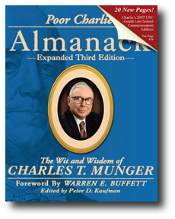
Poor Charlie’s Almanack
Charles T. Munger · Edited by Peter D. Kaufman
Key takeaways
A few variables drive the outcome.
Understanding a business means figuring out which variables matter and how they interact. More detail helps when it sharpens that understanding.
Incentives belong in the analysis.
What someone gets paid, praised, or promoted for can shape their judgment. Intelligence and credentials don’t remove that influence.
Patience requires preparation.
Reading, thinking, and learning build conviction. That preparation makes it possible to wait through ordinary opportunities and act decisively on a rare one.
Keep your beliefs revisable.
Look for evidence that challenges your position. Recognizing when the odds have changed is part of making a good decision.
Knowledge becomes useful through connections.
Ideas from psychology, economics, engineering, and other disciplines can explain more together than they do alone.
Connections
Connected reading
- The Almanack of Naval Ravikant · Learning broadly and building better judgment.
Related notes
Saved notes
Expanded from the saved notes and grouped for browsing. Repeated passages are shown once; original wording is retained apart from link formatting.
These notes include paraphrases and summaries, not verified quotations.
Chapter 2: The Munger Approach to Life, Learning, and Decision Making 21
Business is an ecosystem, just as animals flourish when they find niches, so to do humans. In business, we often find that the winners go ridiculously far in maximizing as few variables as possible.
The Lolapalooza Effect: Charlie has around 100 mental models, instead of thinking in terms of the tradeoffs, he thinks about where these mental models accelerate each other. Once you have 1,2,3,4 forces all pushing in the same direction you can get to critical mass very quickly.
Charlie's biggest guiding principles: preparation, patience, discipline, and objectivity.
The big money is not in the buying and selling, but in the waiting. It takes character to sit there and do nothing. I didn't get where I am by going after mediocre opportunities.
Charlie strives to reduce complex problems to their fundamentals without sacrificing needed information. Investing is not physics, you can't distill something into a one-size-fits-all formula. Instead, follow the Einstein principle of "simple as possible, but no simpler." When dealing with highly complex problems, everything is related.
If you can train yourself to be objective and multi-disciplinary, you will outsmart people who are smarter than you.
Our biggest strength is recognizing when we are in our circle of competence and when we are approaching the outskirts of it.
Search for risk that are easily understandable.
When it comes to investing, spend more time learning and thinking than doing.
Practice extreme patience with extreme decisiveness.
An investing principles checklist is important, but even more important is realizing they all work together and not as individual points. They aren't even easy to prioritize in most cases.
Checklists are vital to successful investing
The only way to win is to work, work, work and hope to have a few insights.
Develop into a life-long learner through reading, curiosity, and make the goal to become a little wiser every day.
More important than the will to win is the will to prepare.
Acknowledging what you don't know is the dawning of wisdom.
Never fool yourself, and remember you are the easiest person to fool.
Enjoy the process over the proceeds because you live in the process.
Always invert! Think forwards and backwards.
Don't overlook the obvious when digging into the details.
Buy a few great companies, then you can sit on your ass.
Chapter 3: Mungerisms: Charlie Unscripted 2
Try to be consistently not stupid, instead of trying to be very intelligent.
Passion is more important than brain power
Harvard School Commencement Speech 8
Don't be resentful
Don't be envious
Be reliable
Learn from others
"If I have seen further than other men, it is because I stood on the shoulders of giants"
When you go down, get back up.
Never make a bet you can't come back from
Give more attention to the evidence that tends to disconfirm your beliefs - especially if those beliefs are strongly held.
A Lesson on Elementary, Worldly Wisdom as It Relates to Investment Management and Business 36
You know nothing if you only know facts in isolation, there has to be a theory that holds them together
First rule: you have to have multiple models
"to a man with a hammer, everything looks like a nail"
You have to understand basic math and probability really well
Accounting is the starting place, but its a crude approximation and it's limitations are easy to understand
Communication requires the 5 Ws
Tell who
To do what
where it needs to happen
when it needs to happen by
and why you need them to do it
If you tell people why, they'll understand it better, consider it more important
Psychology says that even if they don't understand the why, people still comply more often
You don't need to understand everything well, just well enough to apply it. Learn things like:
Backup systems from engineering
Breakpoints
Critical mass from physics
The brain does not have unlimited circuitry, it has shortcuts and we must be aware of them
We can take advantage of them in others
We can be aware of them to slow down and clarify our own thinking
The two-track analysis:
What are the factors that govern the interests involved? Rationally considered?
real probabilities, real interests
What are the subconscious influences where the brain is automatically doing these things?
biases, instincts
People who narrowly specialize can get terrible good at occupying a niche
Scale makes you more efficient through things like informational advantage, but the bigger you get the slower you move and the more human nature you have to navigate
People naturally retreat when they hear things they don't want to hear - it's automatic. We have to train ourselves out of that.
Capturing value matters - there are markets that get down to 5 real competitors and no one makes any money (airlines). There are markets that have the same dynamic and everyone makes huge margins. (CPG food)
In some industries all of the innovations flow down to the customer
You have to figure out your circle of competence and stay within it, figure out where you have an edge and play to that edge.
The best investors find that edge, bet big when they find opportunities within it.
You don't need many insights in a lifetime, maybe 10 total and when you find them bet big.
A company selling at a high multiple can still be a bargain if you believe the position has room to run.
Betting on the quality of a business is better than betting on the quality of a manager. It's hard to find managers so good that you'd follow them into any business.
You will get opportunities to profit from underpricing.
A Lesson on Elementary, Worldly Wisdom, Revisited 21
To be a great thinker, you have to develop a mind that can jump jurisdictional boundaries. Take the big ideas from the core disciplines.
Ideology is the most extreme distorter of human cognition
Ideology is better at pounding out ideas than reasoning them out
Being totally sure on something makes you a lazy thinker
Take all the models from psychology and other disciplines and use them as a checklist when reviewing complex systems
Psychology severally under-estimates the power of human misery because you aren't allowed to run experiments that harm people
The same goes for stress - we make terrible decisions under duress.
Lollapalooza effects:: when 4-5 forces from the basic disciplines come together to accelerate one another
Ex. incentive caused bias - people do bad things to get rewards
2 people see this, and social proof bias kicks in "if they do it, it's okay"
There's no system for automatic good judgement
Make the world easy for yourself, don't focus on hard problems
It is possible to make fewer mistakes than other people simply by focusing and learning from mistakes intentionally once you do make them - Circle of Competence
Part of what you have to learn is how to handle mistakes and new facts that change the odds. Life, in part, is a poker game, wherin you have to learn to quit when holding a much-loved hand.
You must have the confidence to override people with more credentials than you whose cognition is impaired by incentive-caused bias or some other psychological force that is present. But, there are also cases where you must admit you have no wisdom to add and you must trust the expert.
Good literature (and leadership) makes the reader reach for understanding. It works better, the reader holds it better. The commitment and consistency tendency - if you reach for it, you feel like you own it.
People are heavily influenced by what other people do and think
People repeat what worked for them the last time
Everything should be as simple as possible, but no more.
Be passionate about wisdom, about accuracy, and curiosity.
Believe in the discipline of mastering the best people have ever figured out. Don't try to re-invent the wheel.
Practical Thought About Practical Thought 7
When deciding, simplify the problem by deciding on the no-brainer questions first
Reality is revealed by math
It's not enough to think problems forward, you must also think about them backwards.
Think in a multi-disciplinary manner - learn the concepts from freshman level college courses
Really big effects come only from a combination of effects
This chapter builds Coca-Cola backwards using only basic concepts
If academia and business functioned well, everyone could explain the success of Coca-Cola through the use of basic concepts and problem-solving techniques
The Need for Multidisciplinary Skills from Professionals: Educational Implications 18
There are frequent, negative effects from subconscious mental tendencies
Incentive-caused bias: the natural cognitive drift toward the conclusion that what is good for the professional must be good for the client
Man with a Hammer Tendency
To a man with only a hammer, every problem looks like a nail
When someone obtains a broad enough understanding of the basic disciplines, and that he must fight the incentive bias he has taken a step toward wisdom
Problems by definition cross many academic disciplines
Pilots learn not just to pass a test or two, but instead to practice-based fluency to the point they can handle 2-3 intertwined problems at once
He learns when to concentrate mostly on what he wants to happen, and when to avoid what he doesn't want to happen
Checklists are mandatory
Training time is allocated among subjects so as to minimize damage from malfunctions, so what is most important in his performance gets the most training and everything else is raised to high fluency levels
Even after original training, he is forced into a special knowledge maintenance routine
The truly big ideas in each discipline, learned only in essence, carry most of the freight
Winning answers rely on fundamental concepts before anything else: agency costs, marginal utility, etc...
When organizing the disciplines:
Rank and use in order of fundamentalness (sciences, engineering and math first)
Master to tested fluency and routinely use the essential parts of all four
Don't remove a principle unless you can prove that it isn't true
Take a simple, basic idea and take it very seriously.
Academic Economics: Strengths and Faults after Considering Interdisciplinary Needs 18
If you were to persuade, appeal to interest and not reason.
The study of economics, like anything is a matter of timing. Economics became popular because it was used to defend the free market when democracy was battling communism in the Cold War.
Opportunity costs and incentives are superpowers
Academic subjects are too disconnected from one another
By using a checklist, you won't overlook things that you might have otherwise forgotten
Everyone overweighs things that can be numbered because it yields to the methods we are taught in school. The hard-to-measure stuff is often just as important, if not more so.
Physics Envy: trying to to fit a problem and solution perfectly together using math - results in false precision.
Extreme success in business is caused by the following:
Extreme maximization or minimization of 1-2 variables
Adding success factors so that a bigger combination drives success
Extreme good performance over many factors (Toyota manufacturing)
Catching and riding a big wave
Instances where you can raise the price and demand goes up:
Luxury goods - price indicates quality
Non-luxury goods where reliability is a purchasing factory and price again indicates quality
Raise the price and use the revenue to make sales work better through inentives
Raise the price and use the revenue in unethical ways like mutual fund commissions
Bringing in new ideas is easy, getting rid of old ones is hard.
The Psychology of Human Misjudgment 97
Reward and Punishment: Super-response Tendency
Incentives and disincentives change cognition and behavior and we always under-estimate them
Appeal to interest, not reason
Never think about anything before you think about the power of incentives
Prompt rewards work better than delayed rewards
Incentive-caused bias - man drifts into bad behavior in order to get what he wants, that's normally driven by incentives
Real examples: sales teams forced to live only on commissions will bend the rules to increase them, whereas salary based one sales teams may not work hard enough - it's all about tradeoffs
Granny's Rule: eat your carrots before desert, do the daily unpleasant stuff and reward yourself with the things you enjoy doing
Liking/Loving Tendency
People like and love being liked and loved
Doubt Avoidance Tendency
We will reach a decision quickly to avoid doubt - we hate doubt.
Inconsistency Avoidance Tendency
Our brains conserve space by being reluctant to change, which is a form of inconsistency avoidance.
An ounce of prevention is worth a pound of cure - it's better to avoid bad habits altogether than to have to reverse them.
We're reluctant to change for the following reasons:
It facilitates faster decisions which was a necessary evolutionary trait
It facilitates group cooperation
New ideas aren't adopted because they are more difficult, they aren't adopted because they are inconsistent with the current norms.
People tend to accumulate mental holdings of fixed conclusions that are not re-examined even though they are wrong.
Charlies Darwin used the opposite of confirmation bias. If he thought he had a particularly good idea, he searched for and considered the evidence that would prove his theories wrong.
Curiosity Tendancy
Curiosity is what separates us from the other animals, the curious also have more fun and earn more wisdom long after their formal education has ended.
Kantian Fairness Tendency
Any rule that if followed by everyone, makes the system work better for everyone - when violated, we become extremely upset as a collective.
Envy/Jealousy Tendency
It is not greed that runs the world, but envy.
Envy and jealousy tend to ruin cognitive thought and good organizations, they are also natural human emotions.
Reciprocation Tendency
The automatic tendency of humans to reciprocate favors and disfavors. This is the click-whirr response from Influence
You can always tell someone off tomorrow if it's still a good idea.
Often joins forces with incentives and inconsistency avoidance
Applies no matter the size of the concession or relevance to the transaction
We're actually pre-programmed to please rather than being pleased
Influence from Association Tendency
Creating a new habit is triggered by rewards previously bestowed
People associate things like price with quality
Works even when the association appears trival
Antidotes to being influenced by association
examine the past reasoning, looking for factors that existed and no longer exist
look for new aspects that apply to the new situation and didn't apply previously
We need to under-appraise the talent of people we dislike
IFA can swamp the normal reciprocation theory, when someone receives a favor while they are down - the favor triggers a envy-driven dislike associating with people who have good fortune or are rich
We must be aware that the average dimension in some group will not reliably guide us to the dimension of a specific person or item
Pain avoidance
When reality is too painful, we distort the facts to make them bearable
Excessive self-regard tendency
We mostly appraise ourselves on the high side
Once we own something, we over value it and would pay more for it than if we didn't
Our excess regard for ourself makes us like people more like us
We love our own conclusions more
Overoptimism
What a man wishes, he will believe
Antidote is stats and math
Deprival Super-reaction tendency
Losses seem to hurt more than gains seem to feel good
We react irrationally to small losses
Often protects groupthink because we don't want to lose colleagues or partners
Combines with inconsistency avoidance to make us continually bet on losers: we don't want to lose something that we own and believed in
Social Proof Tendency
We have a tendency to simplify - to think and do - what we observe around us.
Manipulating the quality of your peers is more effective than teaching them
Applies to action and inaction
Learn how to ignore others when they are wrong
Contrast-misreaction Tendency
As perception goes, so goes cognition.
Routinely used in CPG where a price will be listed that high artificially high, then a "sale" price is listed next to it
Cognition, mislead by tiny changes involving low contrast, will often miss a trend that is destiny. "A small leak, will sink a great ship"
Think oil and gas today, Blockbuster, Kodak, etc... they were killed by multi-year, decade long-trends, not one, singular event.
Stress-Influence Tendency
Light stress improves performance, heavy stress causes disfunction
Often made more powerful by social proof tendency
Availability Mis-weighing Tendency
We can't use what we can't remember, so we tend to overweight knowledge that is closer in memory or available to us
The antidote is checklists, process, etc... which are helpful in making sure we don't forget what we know
Vivid evidence becomes more powerful
An idea or fact is not worth more just because it's easy for your brain to access
Use it or lose it tendency
All skill decline with disuse
If you are diligent, the tendency fades - i.e. the more time you spend learning and understanding the harder it is to lose it - it will also come back faster once refreshed
Authority Misinfluence Tendency
Humans have a tendency to follow leaders blindly
Be an over-quiet mouse around your pilots
Be careful who you appoint to power because authority figures are hard to remove, and their leadership lingers
Twaddle Tendency
Man is a social animal that has the gift of language - we can do serious damage with that gift and prevent real work from getting done
The principal job of a leader is to keep people who don't matter from interfering with the work of people who do
Reason-respecting Tendency
Humans have a natural love of accurate cognition and exercise of problem solving. We learn best when a would be teacher or leader gives correct reasons for what is taught.
Few practices are wiser than thinking through those reasons and communicating them to the recipient of the order
Always tell your subordinates: what, where, when, and why
Lollapalooza Tendency
Psychology is exponential and all of the above tendencies can work with or against one another, when they compound the results are drastic one way or the other
Other notes:
Tendencies are much more good than bad, or else we wouldn't have evolved with them
Tendencies are not destiny
Psychology should use more inversion, create more checklists, and emphasize the combinations of effects
Additional saved notes 43
Fewer levers equals better
Trade offs aren't the only way market or business forces work, they can also compound on one another to accelerate growth.
Be patient, prepare, have discipline and be objective.
Simple, but no simpler.
Stick mostly to what you know, and when you venture outside of it be extra self-aware.
Invest with extreme patience and only when the conviction is so strong you want to act decisively.
The only way to win is to work, work, work and have a few unique insights.
Life-long learning is essential to success - read, stay curious, and become a little smarter each day.
Will-to-prepare > will-to-win, the greats love to practice and practice never feels like work.
Passion is more important than brain power.
Try not to be stupid, instead of trying to be intelligent.
Facts are worthless in isolation
Understand the basics of several core disciplines well. Math, stats, sciences, psychology...
Always give the reason for asking someone to do something, they'll almost always do it regardless of the reason
The brain has shortcuts, no when to use them to your advantage and ignore them to prevent your own downfall.
Consider the rational, and the irrational with all decsisions
The larger an organization, the more human nature you have to navigate.
Find your edge, stay there, bet big on insights with in it.
Business > team
Don'd define yourself by an ideology. Naval Ravikant said a similar thing in The Almanack of Naval Ravikant
Look for opportunity where multiple forces from multiple disciplines are acting on one another
Part of life is learning how to act when the odds change or new information comes to light
Good teaching in all forms makes the student reach for understanding
We're heavily influenced by others and our past successes.
Be passionate about collecting wisdom and accuracy.
Master what people have already figured out.
Have and maintain several tools for problem solving that are routed in the sciences + psychology
Concentrate on what you want to happen and what you want to avoid - what does this look like in success form, what does it look like in failure?
Big ideas carry the most weight
Take simple ideas, and take them seriously.
Bringing in new ideas is easy, getting rid of old ones is hard. Become good at destroying old ideas.
Appeal to interest, not reason.
People like and love being liked and loved
We reach decisions quickly because we hate doubt
We conserve space by being reluctant to change
Curiosity separates us from the other animals
Envy runs the world
We want to return favors and disfavors
When reality is too painful, we distort it to make it barable
We appraise ourselves on the high side and over value what we already own
What a man wishes, he will believe
We follow leaders blindly, be careful who you follow and how you lead
We love to problem solve and to follow reason
Referenced by
Connect the public archive to find incoming links.