Weekend Software
Over the last few weekends, I've had the pleasure of getting back into software building. I'm a novice to say the least, but I probably have a little more knowledge than average on how software comes together.
What I built was a full-blown app, with its own databases, security, user-permissioning, etc. Well past the artifacts I usually make inside of Claude. The driving force was a good use case, and really because I wanted to see if I could.
The plan was to hit a wall pretty quickly and need to call in help.
That wall never showed up. Being that wrong was a bit of an eye opener to someone as AI pilled as I might be at this point. I knew software investing would be different, and this first-hand experience laid out just how true that will be.
I wrote recently that software's death has been greatly exaggerated. I mean that. Software isn't going anywhere, but parts of it have changed and will keep changing at a rapid pace over the next however many years.
There are a few things I took away from the multi-weekend sprint, and from my own AI use, that are sticking in my brain. I want to put them down on paper and see how they change over time.
- Taste and empathy matter. This might be a trope at this point, but it doesn't make it any less true. The bar to build software has lowered, and anyone can probably clear it with enough curiosity and elbow grease.
That means a lot of people who shouldn't build software will build software, and they'll do it without thinking through the user experience. The products that are easiest to use will get the most traction, and that hasn't always been the case (see Salesforce, Oracle, SAP).
Users used to prioritize use case over experience. I don't think they have to anymore. Instinct is a good B2C example: users onboard over text and get value almost immediately, which brings me to... - What is a moat anymore? If I can use any agent or harness, and onboarding is as simple as a text message, where do moats eventually land? Bringing physical data into the digital layer feels like one. Brand and incumbency are another, if you can take advantage of them, because trust matters more as uncertainty grows. And then owning the ability to create better outcomes through networks or proactive action. I'm sure there are more, but those are the ones top of mind for me right now.
- You better innovate, fast. File this one under "duh," but it can't be overstated right now. Here's some of what's happened this year in AI: Instinct launched (an agent in your pocket), Claude Fable, OpenAI Astra, OpenClaw (Instinct 1.0), Kimi K3, and countless more. The pace of improvement is incredible, and probably only going to accelerate.
- Time to value and customer success will grow in importance. If we've learned anything from the cloud and mobile eras, it's that customer expectations eventually rise. That group of kids who grew up on iPhones and benefitted from Steve Jobs' "it just works" philosophy? They lead software procurement for Fortune 500 companies now.
Even before AI, plenty of people argued that the minimum viable product (MVP) philosophy made famous by the Lean Startup was dead. Customers now demand something closer to a complete product early.
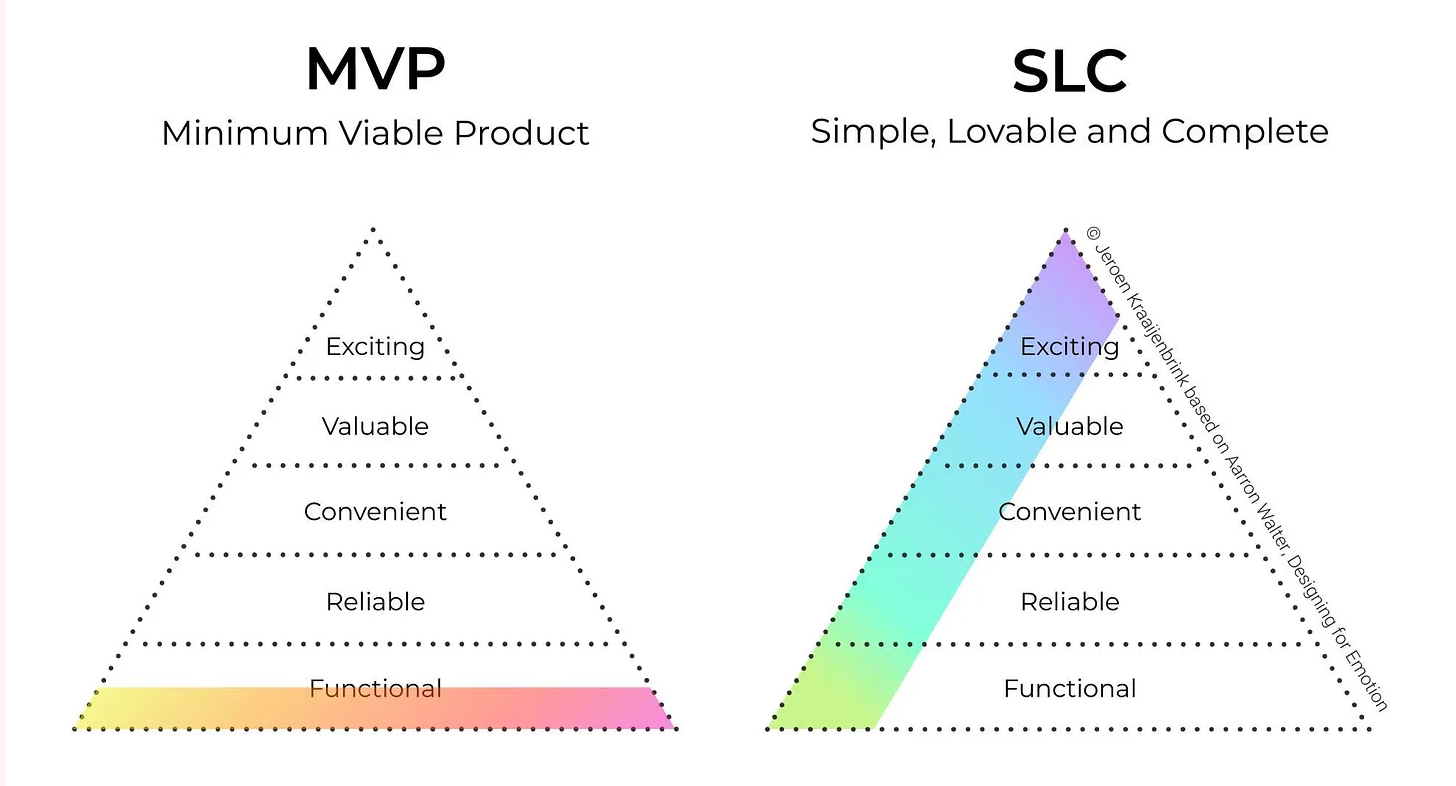
In the AI era, I'd argue customization gets added as another line on the pyramid above and becomes the new customer success. The customer knows you can build new features for them in a matter of hours (or that they can do it themselves), and I think that becomes an expectation sooner rather than later. We've seen a version of this with FDEs and onboarding, but that might be just the beginning
One thing I always come back to, and have written about on this blog several times, is what stays the same. In times of uncertainty and complexity, you can fall back on those things. A lot of what I listed above is the same as it's always been: delight customers, expand defensibility, build organizations that change with the times. That usually equals success.
What's changed is the weight on each variable and the pace at which it all moves.
The last thing I took away has nothing to do with software investing.
You can now work while you sleep, or better yet, while you play with your kids. I opened this by saying I built something over a few weekends. That word means something different than it used to. Thirty minutes to an hour of really teeing up what I wanted, then walking away, then coming back to the result. Over and over. Exercise, swim lessons, brunch, all of it still happened while the work kept going in the background.
Output quality tracked with how much thought I put into the setup, and almost not at all with the hours I spent at the keyboard after. You can call the new skill taste, prompting, whatever you want, but that's a profound shift in how we will work.
The hours didn't shrink. Some of those weekends they went up, because teeing up work is more fun than grinding through it, and every hour I got back went into setting up the next thing.
Plenty of people will use this to do 8 hours of work in 4. My money is on the people who still put in the 8 or the 10. For my whole career, output has been roughly a function of hours in the seat: one hour in, one hour of work out. Now it's a function of how many good problems I can frame and how well I can judge (written about here and here) what comes back, and one well-framed hour can set several hours of work in motion. Linear input, something closer to exponential output.
Which makes the distance between a 4-hour day and a 10-hour one much wider than it used to be. Effort is still the input, it just buys a lot more than it used to.