Software's Death Was Greatly Exaggerated
There was a point in time this year where you couldn't open the Financial Times, Wall Street Journal or X without finding some proclamation that software was done for.
But six months later, the data says that couldn't be further from the truth. I've long thought that AI will look more like the cloud - creating more budget for software, not less. Cloud 10x'd software TAM and I think it's a fair assumption that AI could do the same.
At a high level there are 3 metrics that can immediately give us some insight into what's going on in software:
- Growth: are companies still growing at a healthy clip?
- Retention: are customers staying, and if so, are they spending more?
- Gross margin: do software companies have less pricing power or a higher cost to serve?
Those metrics have largely rebounded from a slight dip as customers adjusted their software budgets and larger incumbents began to put AI strategies and budgets in place.
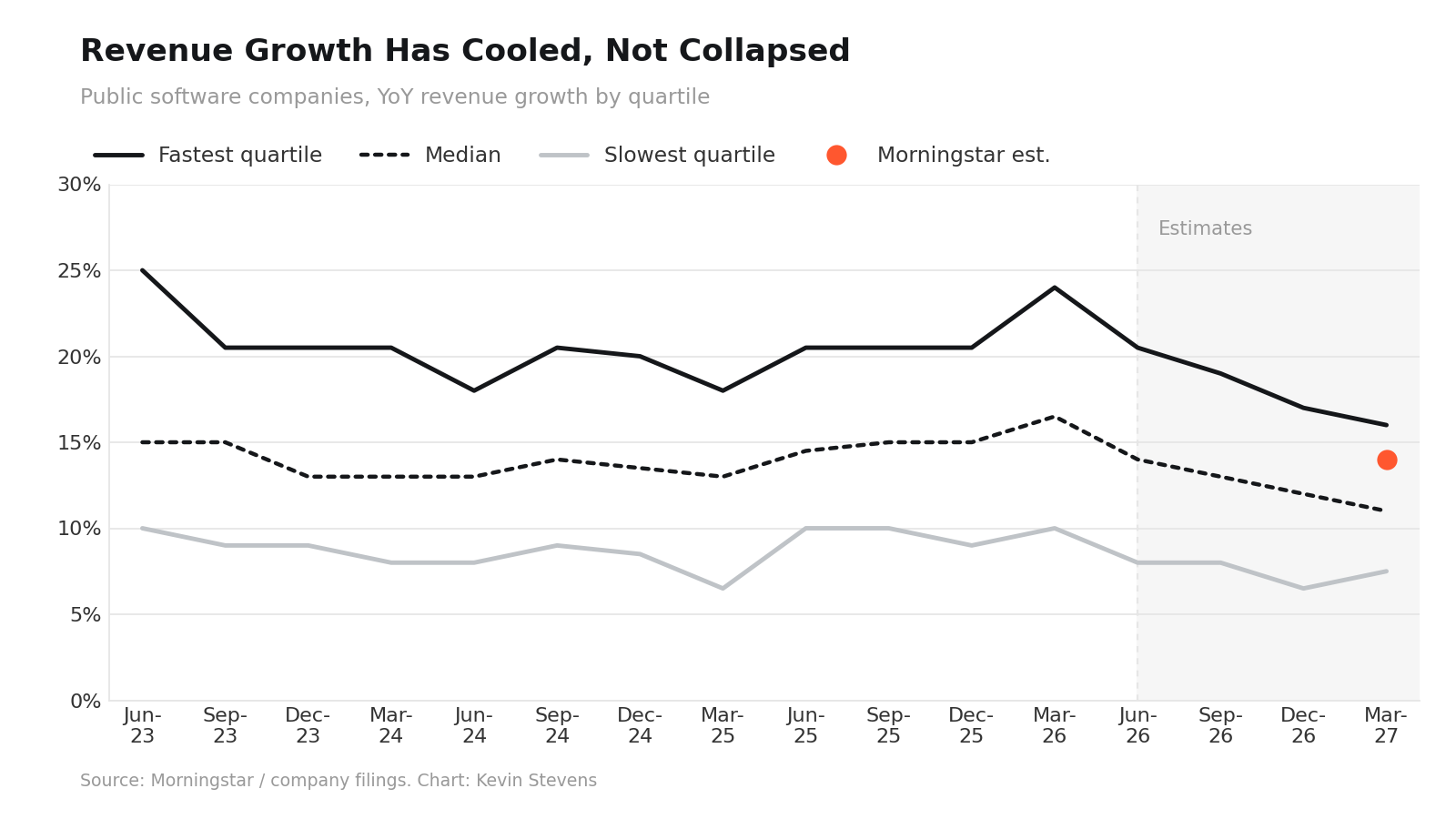
Growth in public software companies has dropped by a few percentage points - from 14% to 12% on average - since 2023. Of course, investors are contrasting this with the massive growth of AI-native tools and LLMs in the private markets. That is fair, but I don't believe those tools are massively stealing budgets, yet. That's not to say they couldn't or won't in the long-term.
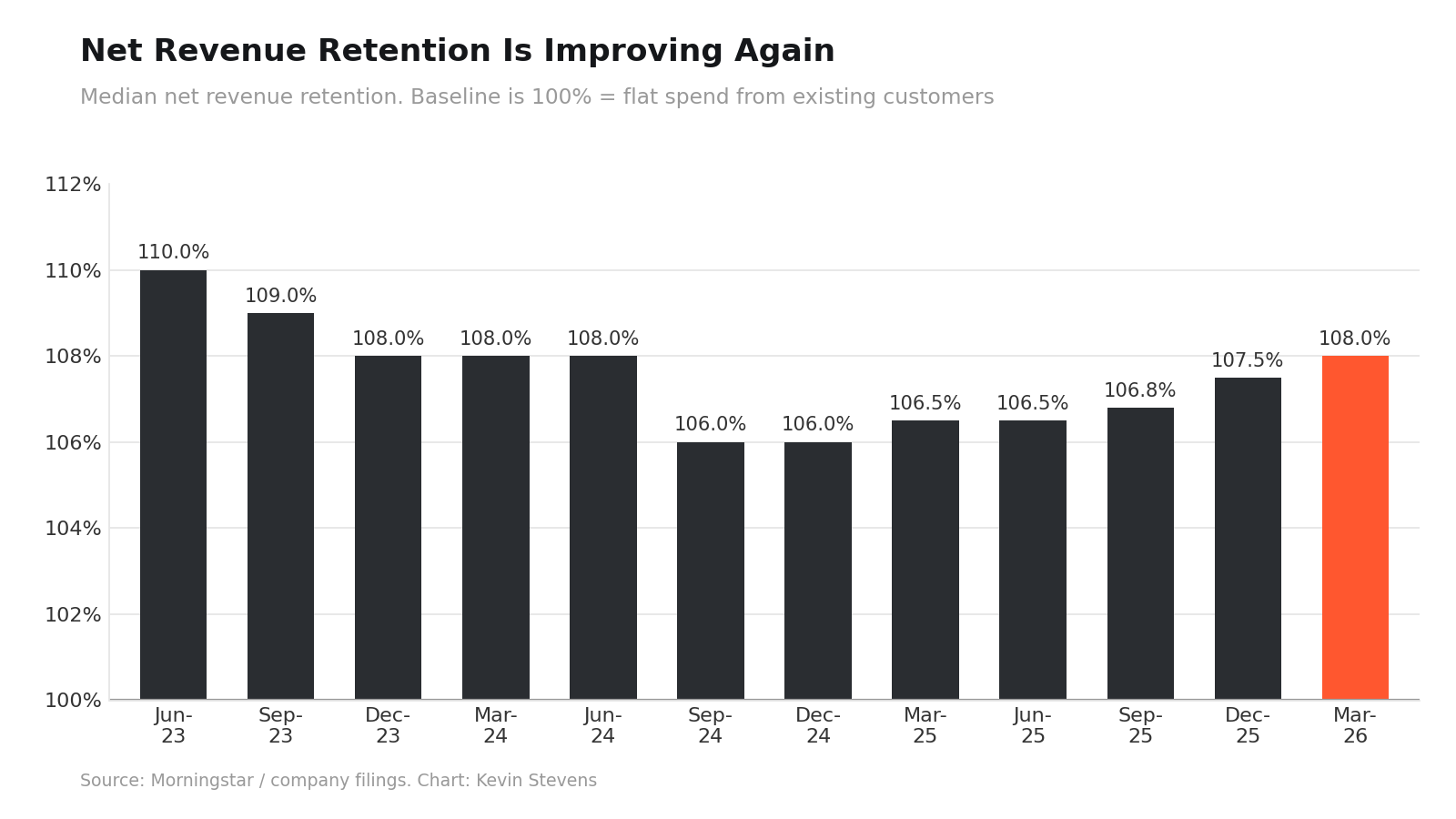
What about retention? Are customers leaving their current vendors at some unprecedented rate? The answer there is no. In fact, net revenue retention is improving and back to 2023 levels. Gross retention hasn't moved from 95% since 2023 either.
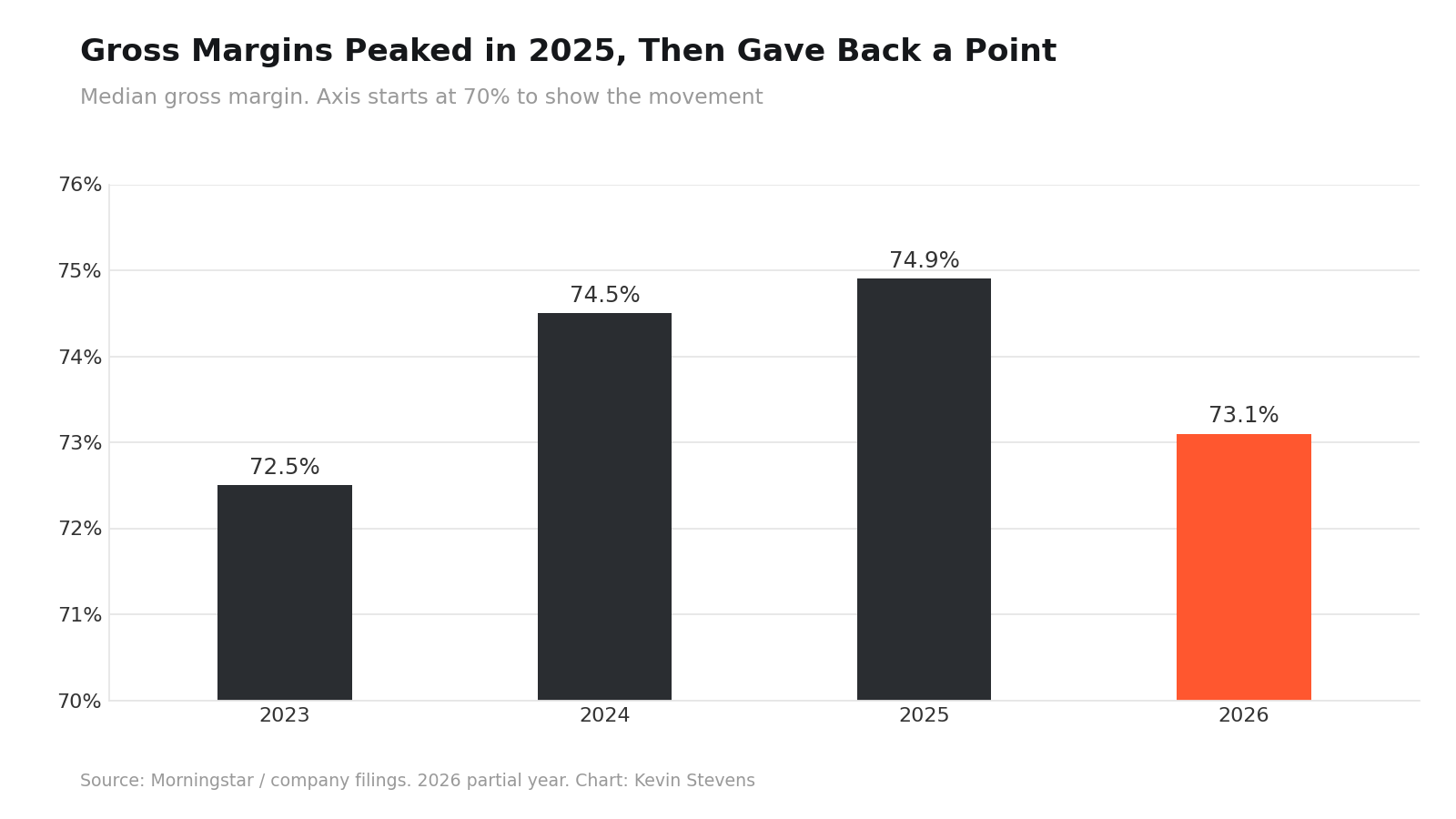
What about pricing power or cost to serve? Are gross margins declining? The answer there is more mixed, but trends toward no. They are down from 2024 and 2025, but above 2023 levels. My hunch is that incumbents are finally deploying and getting revenue from AI features, which has driven gross margin downward, and there are certainly some discounts in non-mission-critical software as well.
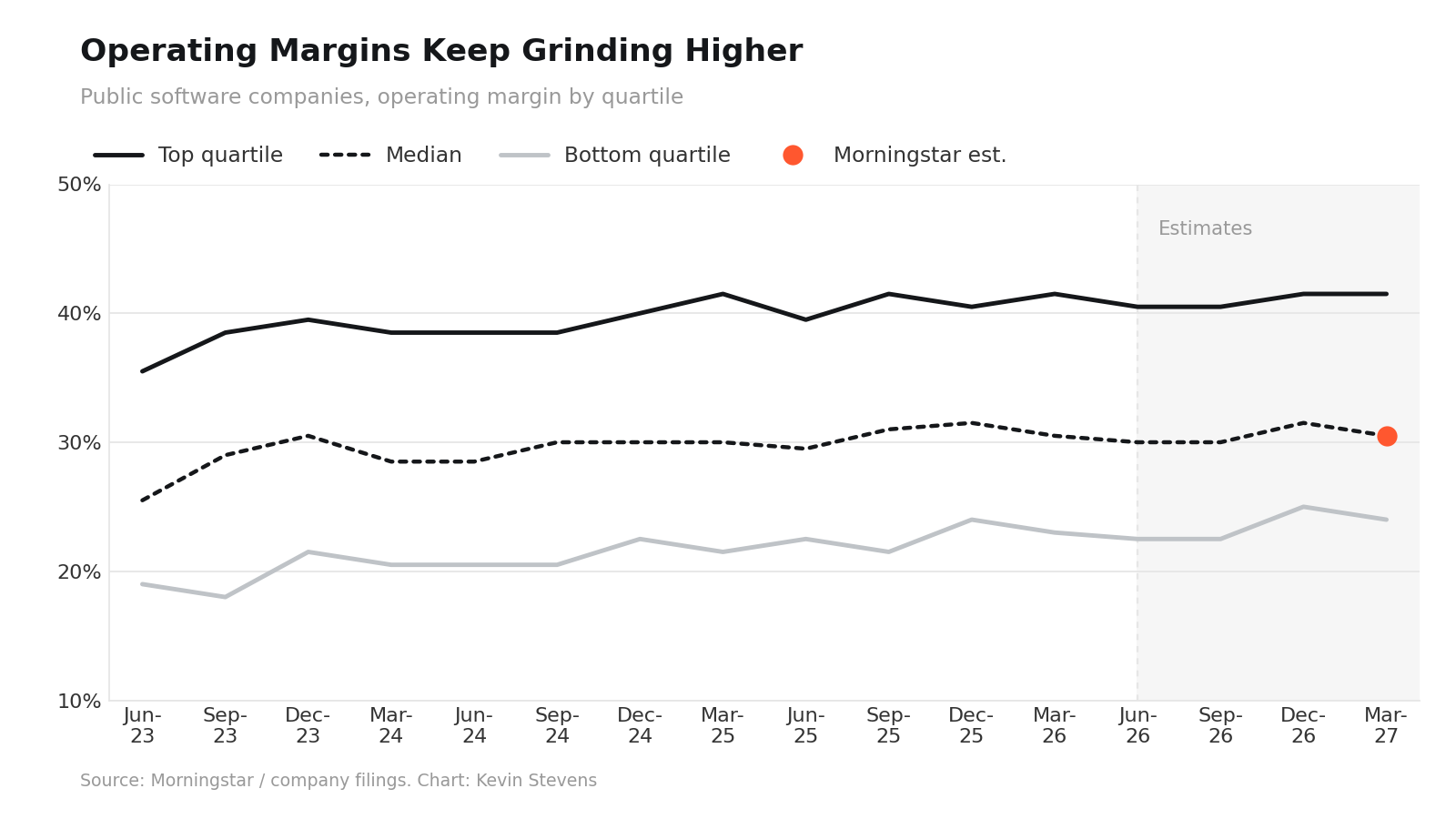
One thing that is consistent across software in the public markets right now is operating leverage, and I think this is a point that's currently under-discussed. Is there a possibility that software companies are benefiting more from AI than other industries?
This makes intuitive sense to me because LLMs and the ecosystem around them currently slant heavily toward software engineering, and no one employs more software engineers than software companies.
It shows up in the numbers too. Operating margins continue to trend higher in the space and show little sign of slowing down. In 2023, when the markets wanted software to focus more on profit than growth, operating margins were low 20s on average; today they are near 30%.
The sector broadly is healthier too. If we look at the Rule of 40 across the board, 43% of software companies have crossed the threshold and the median is now 35.2%, up from 30% two years ago. The mix between growth and EBITDA margin in that calculation has changed only slightly.
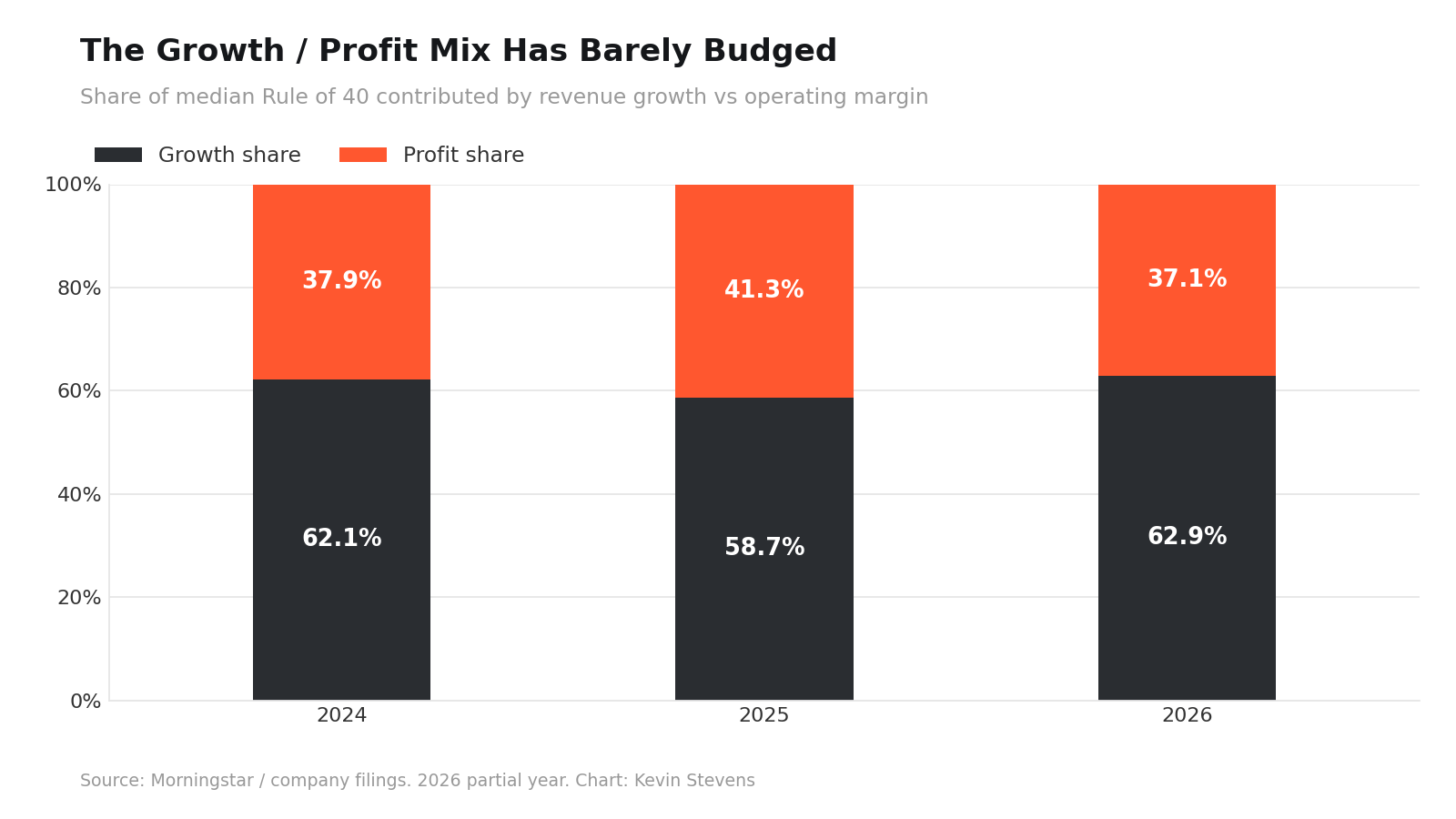
It had been a while since I sat down and did this kind of analysis on the space, and the numbers surprised me. Often when I do this type of work, the data is messy and unclear, but that's not the case with software right now. Everything looks healthy.
It's clear that the market is concerned about terminal values and cash flows, which has driven some of the re-rating. But that blanket re-rating has largely been unfair, and the market has woken up to that. There are pockets that have done well and probably will continue to do so. Overall, multiples are back in line with 10-year averages and that's a healthy place for us to be.
This all may age like milk. I don't actually think AI disruption started with ChatGPT in 2022, like most of these analyses assume. Instead, I view Anthropic's launch of Opus in Q3 of last year as the real starting point, because that's when adoption really picked up with a tool that could do a lot. That means we're less than 12 months from the starting line here, with decades to go.
But overall, the AI scare remains more narrative than fact at this point, and if anything it seems to be increasing budgets and profits across the sector. If I were a general workflow or automation app, would I be terrified right now? Absolutely.
But software with real staying power across specialized data, workflows, or mission-critical systems still feels like a good value. And those criteria were always table stakes for beating the competition, that competition just might be coming from more places and at a higher rate.